
Debbie Grattan Voiceover Branding Logo
  • HOME
  • DEMOS
  • ABOUT
    • BIO
    • RECENT PROJECTS
    • TESTIMONIALS
    • CLIENTS
    • WHY HIRE DEBBIE
    • STUDIO SPECS
    • RESOURCES
  • SERVICES
    • SERVICES
    • COMMERCIALS
      • COMMERCIALS
      • HEALTH & MEDICAL
      • AUTOMOTIVE
      • BUSINESS & CONSUMER
      • CHILDREN’S PRODUCTS
      • POLITICAL
      • INFOMERCIALS
      • RADIO SPOTS
    • NARRATION
      • NARRATION
      • CORPORATE VIDEOS
      • HEALTH & MEDICAL
      • TECHNICAL
      • E-LEARNING
      • WEB VIDEOS
      • EXPLAINER VIDEO
      • TRAVEL & LEISURE
    • INFOMERCIALS
      • INFOMERCIALS
      • CHILDREN’S TOY
      • BEAUTY AND COSMETIC
      • HEALTH, FITNESS & OTHER
    • CHARACTERS
      • CHARACTERS
      • ANIMATION VOICE OVER
      • ACCENTS & DIALECTS
      • ON-CAMERA ACTING
      • CHILD TEEN VOICEOVER
    • PHONE RELATED
  • BLOG
  • CONTACT
    • CONTACT DEBBIE
    • REQUEST A QUOTE
    • REQUEST AN AUDITION

VERSATILE

EXPERIENCED

PROFESSIONAL

1-866-DGVOPRO

Debbie Grattan

What an Aspiring Voice-Over Actor and a Winky Artist May Have in Common

April 8, 2015 by Debbie Grattan

art-test

Remember Winky? Winky artist was just one of many different cute, pencil-drawn animals that my generation may fondly recall appearing in a series of ads in the back of magazines. The ads promised something like:

“If you can draw this, you may have hidden talent as an artist!”

Well, I wasn’t much of an artist back then, but I did my best to copy the drawing, send it for evaluation, and then hope upon hope to win a cash prize. Of course, what I didn’t understand at my tender age was that the offer was just an advertising gimmick to get people to sign up for a home-study art course. It’s tough to remember when we were innocent enough to believe there was a simple, predictable path to follow to have a career as an artist.

So I had to smile when I read the title of this blog post: “8 Steps to Becoming a Voice-Over Talent” Wow! Follow these eight simple steps, and you can be a professional voice over actor. Hang your shingle, start your business, and begin raking in the dough.

While I respect the article’s author and believe he was genuinely trying to be helpful, I have a few issues (four to be exact) with articles that make voice-over careers sound like a piece of cake.

Issue 1: Tricking the Brain

Breaking topics into a small number of steps has become a very trendy way to catch readers’ attention. They’re also prime for tricking the brain into thinking something tough is actually easy.

Since at least half of the human mind thinks in linear terms, divide and conquer is a strategy the mind embraces. And just because your mind is tricked into thinking something is easy doesn’t mean, in reality, it is. A case in point:

How to Become a Brain Surgeon in 8 Steps

Eight easy steps from your couch to the OR, with drill and scalpel in tow!

Issue 2: Misconstrued Career View

The brain surgeon article may appear laughable, knowing it takes a heck of a lot more than eight steps to operate inside someone’s skull. But eight steps to becoming a voice-over actor may seem entirely feasible.

I’m not comparing voice-over work to brain surgery (although let’s face it, the marketing is WAY easier for brain surgeons), but I am pointing out a consistent misconception that views a voice-over career as somehow different and easier than many other types of career paths.

Information is often presented as if anyone with a “good speaking voice” could easily and successfully launch a high-paying voice-over career. Lots of voice over workshop advertisements hype up the career to sometimes dizzying degrees, leading readers to believe they can jump right in and meet with instant success.

Issue 3: The Age-Old Winky Artist Lure

What readers may not realize is many of the hyped-up and easy-step articles are drawing them in with a rickety promise, telling them things they want to hear – and then trying to lure them into voice-over coaching, classes, demo services, or other paid offerings.

Kinda reminds me of the same way “Drawing Winky” lured people into home-study art courses.

Issue 4: Becoming vs. Being a Voice-Over Actor

Finally, there’s a massive difference between becoming something and being something. Following all the necessary steps does not MAKE you a professional voice-over actor — or even a good one. While those eight steps may be somewhere on every successful voice talent’s path, countless other steps may or may not need to be taken as well.

Three Cheers for Reality

Aspiring voice-over actors would be well served in reading articles written by seasoned pros that tell it like it is.

“Hey, this is not an easy profession but if you have some natural talent and are willing to put in the time, energy and money to develop your talent, AND you have the necessary drive and discipline to run your own business successfully (doing everything that entails), then you may have a shot.”

I have read (and written a few) articles that say that, and I appreciate the honesty. More importantly, I hope aspiring voice-over talents take the time to get a balanced view of what is actually involved in ramping up a successful voice-over career.


Filed Under: For Voice Over Talent Tagged With: female voice over actor, voice over actor

Losing Leads to Winning If You Have the Right Perspective

March 31, 2015 by Debbie Grattan

Losing Leads to Winning If You Have the Right Perspective

I recall a little awards presentation at the local VFW for my daughter’s school a few years back.  Middle-schoolers were asked to write a short essay on why our armed forces are important.  My daughter is a truly outstanding writer, but she didn’t win the contest.

In fact, she didn’t even place.

This was quite upsetting to her, as she had become accustomed to winning in most aspects of her 13 years of life at the time. She’s consistently been a 4.0 student, a medal-winning member of her Science Olympiad team, sings solos in her choir, takes dance, has made a good income as a child voice over actor for several years.

She’s been very involved in theatre productions since she was about 8 years old, winning many leading roles. Can you relate – fellow proud parents of over-achieving youngsters??

Yet, when she didn’t win top three in this little writing content, and she knew that she would not be advancing any further, she declared that she must be a terrible writer.

You need proper perspective to turn losses into future success.Why else would she not have been selected as the winner? And if she couldn’t even be selected as a winner in a little school essay contest, how could she ever think that she could someday be a published writer (which is one of her goals)?
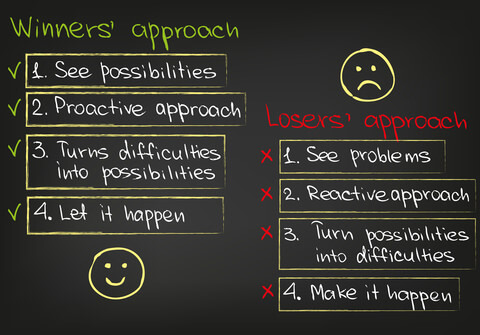
Of course, this became one of those “teach-able moments” for me as a parent, feeling like I needed to jump in and provide a better perspective.  My husband and I were quick to point out that there are many successful people in all different types of professions, who have failed many more times than they have succeeded.

That the MOST successful people are usually also the people who have failed the most in life.

That failure is usually what drives a serious, goal-driven person to keep moving forward, refining, and improving upon their given talent, until they reach an even higher goal.

We tried to help her see that there is subjectivity in judging any artistic endeavor, such as writing.  It’s just someone’s opinion and if there had been different judges there could have been a different outcome.

My husband pointed out that JK Rowling was turned down many times, before she finally found a publisher willing to publish her first Harry Potter book (and there are dozens more stories like that one). Meryl Streep has lost MANY more awards than she’s won.  Does that make her a loser? Of course not. There are hundreds of examples of people who persisted in the face of failure and repetitive loss.

Despite all this evidence to support the notion that losing isn’t really a bad thing after all, my daughter still felt the sting; the “agony of defeat,” and it took until the next morning for her to be back to her usual cheery self again. A few hours of sleep can do wonders!

Winning and Losing – Two Sides of the Same Coin

So what is it, within each of us, that makes us want to win, and hate to lose?  And why do losses in life lead us to doubt our abilities ?  Why does another person’s opinion (or group of people – or “experts”) mean so much?  Why do we need an award to feel worthy?

An inaugural award ceremony for the VO industry a few months prior to my daughter’s award ceremony prompted quite a bit of chatter on both sides about why this (a) was great and long overdue, or (b) self-serving, bordering on non-essential in the industry.

One side argued that asking for money from VO actors to nominate themselves in certain categories was outrageous, and simply a way for the proprietors to make money.  The other side argued that this is standard in the industry, pointing out that acting, advertising, and other creative awards always require a fee to enter, and that winning is then a great feather in the cap for future work, elevating one’s name or company to an “award-winning” status.

I suppose that having “Academy Award Winner” in front of your name can be an achievement of recognition within an industry to propel your career forward.  At least it lets everyone know that you were selected, above all others in your category as the BEST one, for a given year.

While I love watching awards shows, I’ve never agreed that judging a “best” performance of one actor over another is necessary.  Can’t they all be terrific, in their varying roles?  Isn’t that what life it about; variety in everything… Something for everyone?

We were also quick to point out that when accolades are given to the award winners, the “haters” often appear. So, even when you achieve the “winner” status, then you may have to deal with folks who are trying to knock you out of that position, or attack you just because you are a “winner” and they are jealous or insecure about their own talent and ability, or whatever.

Of course, that shouldn’t be a reason to avoid winning, or doing one’s best. But in school, (especially in junior high) this type of dynamic can be brutal. It’s hard to watch your child have to deal with cruel people. Yet, those types of people exist in the world, so we all must learn how to manage the way we think, feel, and respond to what they say and do.

Add social media to the mix and the situation becomes even more intense, particularly when cruel comments can be posted anonymously or under fake accounts.

Social media is also a place where kids, and adults, are constantly exposed to other people’s biggest “wins.” Based on the carefully selected moments and photos people post on their feeds, many lives can appear to be the epitome of perfect, made up only of gorgeous sunsets, exotic vacations and blissful encounters. When those viewing the picture-perfect feeds start comparing the feeds to their own rather ordinary lives, the “agony of defeat” can become a perpetual state of mind.

Striving to Be the Best at What You Do

I understand wanting to be the best.  In the voiceover profession, certainly competition is a big part of the day to day.  When only one voice will be selected for any given commercial voice over spot or campaign, and money, future connections and status is on the line for the winner of the competition, it drives us all to up our game.

But is this what we teach our kids?  That life is about competing for everything, and that it’s usually winner take all? It seems like after about 4th grade, they start keeping score in sporting matches, and begin handing out letter grades, to make sure to label who is the first place team, or A student. What does that do to the ones who aren’t first, or who pull a C average?

We’d like to think it motivates them to do better. But sometimes there is an opposite outcome and a person gets very discouraged because they can’t seem to measure up. There are many casualties that result from this “always be the best” attitude.

Winners Approach vs Losers ApproachI don’t have the answers to these questions.  Personally, I fluctuate back and forth between the message that a strong work ethic is very important and that competition is pervasive and pretty much unavoidable on virtually every level of existence, and that practice is always necessary to be in the winner’s circle, regardless of how naturally gifted you are at something.


Then, on the other side, I have to show compassion for people, and kids especially (including my own) who may not be at the top of the heap, and who struggle with their self-esteem when the game keeps getting harder to play and win.

I find in raising my children that this one perspective around how to handle winning and losing can have big ripple effects. I suspect that the habits they create around this now will shape their future success and quality of life. So, it’s important to try to help them see a balanced approach that celebrates winning and also recognizes losing for the value that it brings.

How do you deal with losing in life and work? What perspective do you use that helps you see losing as a valuable step in winning? Please share your thoughts and comments!

Filed Under: For Voice Over Talent

Alas, is the Actor’s “Good Work” No Longer Good Enough?

March 5, 2015 by Debbie Grattan

An Actor's Good Work No Longer Good Enough

My goal from the very beginning of my acting career was to be a successful working actor. I had the dream that I could make my living as an actor for my entire life, despite the discouraging statistics around job outlook and wage projections for working actors.

In the “old days” before the Internet, the acting landscape was a whole lot different than it is today.

The old-school way of building a successful acting career consisted of landing a job, doing it well, and then landing another job that was more visible, doing it well, repeat, repeat, repeat.

Growing your acting career was based on making new contacts, gaining experience, honing skills and talents, and ultimately (and most importantly) doing “good work” on stage, on screen or in the recording booth.

With persistence and a little bit of luck, eventually the right people would take notice and better opportunities would lead to better jobs and increasing levels of success.

That was how the game looked to me as a young, fresh-out-of-college drama grad embarking on my journey to live my dream and be a successful working actor.

And, do you know what? That simple approach has served me quite well over the years. Even as I transitioned from stage and screen acting to being a professional voice over actor, I still found that if I primarily focused on doing “good work” at every step along the way, one success always lead to another. It was a clear, predictable path.

A Lot More to Professional Voice Over Acting Than People Realize

In today’s internet-driven world, being good at what you do as an actor (especially a professional voice over actor) is still most important. However, there is a new part of the success equation that can create some daunting challenges for many would-be voice over actors just starting out. And even for the seasoned pros, it can still be a time-consuming and arduous treadmill.

TRUTH: We working actors have to do a whole lot more marketing of our talents and ourselves than I ever imagined would be necessary.

Sure, I expected I’d have to promote myself and my profession to some degree, and make lots of new contacts along the way.

But the level and type of marketing that seems to be required today to keep the new business flowing is completely unexpected.

Not only do we have to perform the good work that is at the foundation of our profession, but we have to build and maintain a great website, create fabulous “google-worthy” blog content that builds our audience, contribute profoundly to social media and, in general, stay on top of the constant technological changes that affect how we market our services and selves.

Our livelihood as actors no longer hinges on simply doing what we do well. Now, we also have to build and maintain an intriguing online persona that is attractive to our potential clients as well as to the world in general.

No pressure there!

In a memorable interview, the highly accomplished, talented and ubiquitous Kevin Bacon was asked on The Today Show about how he would navigate the waters of social media, in addition to simply plying his acting craft, if he were just starting out in the entertainment industry today.

Fast forward to about the 2:45 minute mark to hear him speak on this topic… 

He was obviously pretty reticent about the idea. He mentions how when he was young and building his career he “really just wanted to be a serious actor,” (doing good work) and the idea of being a “personality” was the last thing he wanted to think about.

Kevin goes on to say,

Now, in a funny way, if you want to be taken seriously (as an actor) you almost have to be more of a personality and you have to nurture that part of your persona. And that’s a kind of pressure I’m glad I didn’t have to deal with.

I guess in a way, he prefers a full six degrees of separation from his audience over the one degree provided by his Twitter feed.

I’ll bet William Shatner would agree, especially after a particularly memorable Twitter backlash he was hit with soon after Leonard Nimoy’s death.

When William Shatner tweeted over the weekend that he had a prior charity commitment that would prevent him from attending Nimoy’s funeral, he got hit with a negative (and totally inappropriate IMHO) Twitter-storm of responses. Wow, makes me wonder why celebs put up with that kind of “fan support.”

Oh yeah, because they HAVE TO!

I guess these days, if you’re an actor or celebrity, YOUR business is EVERYbody’s business. It’s all apparently just part of that persona-maintenance project. 

How Does an Actor Manage It All

While the pressures of celebrity are not part of my universe, I do still have to play a similar game of persona managing.

So, if this is the new normal, how the heck do we keep up with all this stuff? And by stuff, I mean all of the chores we have to do in addition to our actual professional skills for which we actually get paid!

1. Outsource What You Can

For working professional voice over talents, one way to manage it all is to outsource, if we can afford it. Procuring agents, forming a marketing team, hiring (or in my case marrying) a business manager, an audio editor and others to help us out, can free up huge amounts of time which allow us to get back to the work of doing our good work.

However, one must be mindful to manage and maintain these relationships as well, since they can easily disappear or be disrupted. Additionally, delegating the management of marketing our persona to others can be very tricky business and demands some oversight. These types of relationships must be chosen very carefully.

Based on the Twitter backlash received by Shatner, along with the social media horror stories many companies have lived to tell, it’s also imperative to be very careful about what gets posted on your social media accounts.

2.  Find the DIY Marketing Approach that Works Best For You

If we can’t afford or just don’t want to go down the road of hiring extra help, we can still look for ways to get the biggest bang for our personal efforts using whatever marketing strategy seems to fit best. The content generation approach is certainly not the only way to go, but it seems most effective if you are trying to build good search engine rankings.

In addition to publishing regular blog posts, you can also to choose to incorporate additional DIY marketing strategies such as:

  • Keyword research and SEO
  • Scheduling social media posts in advance for an entire week, or month
  • Investing in automated marketing software that takes care of the repetitive tasks, like email nurturing
  • Expanding your exposure with guest blogs and responses to industry-related questions in forums and groups

Finding DIY marketing tactics that gel with your personality and strengths is key. But the tricky question around this whole marketing approach question is “how much time will I have to spend on my marketing?”

The tricky question around this whole marketing approach question is “how much time will I have to spend on my marketing?”

Every minute I spend marketing is a minute I’m not spending recording a job, preparing a quote or crafting a custom voiceover audition. This is the primary reason why I’ve chosen to delegate as much of my marketing chores as I can. That way, I can stay focused on doing my good work and earning the income that allows me to keep on living my dream of being a successful working actor.

How do you manage the marketing chores that are required in your business? I’d love to hear your comments, especially if you have found effective strategies that are working well for you.

Filed Under: For Voice Over Talent

Exploring the Decision to Hire Male vs. Female Voice-Over Talent

February 20, 2015 by Debbie Grattan

Exploring the Decision to Hire Male vs. Female Voice-Over Talent
The battle of the sexes definitely rolls over into the voice-over arena these days. Actually, there’s not really a battle going on, but rather a very good question:

Is it better for your company or client to hire male or female voice-over talent?

Like most things in life, there is no cut-and-dried, right or wrong answer. But my experience as a professional female voice-over talent for a couple of decades has taught me that companies can uncover the best answer for their specific needs by keeping a few key points in mind.

Industry and Audience

The historical trend has been to go with male voices for male-dominated fields and audiences, and female voices for those that contain more women. But this is one area where history is not necessarily repeating itself.

Many of my clients have contacted me to deliver narration voice-over services in industries that may not seem like the typical place to find female voice-over talent. These include Raytheon Missiles, the U.S. Army and a collection of mining, engineering, medical and financial fields. Inserting a woman’s voice into male-dominated territory (or the other way around) can give the select audience an unexpected twist from what they may have been conditioned to expect.

This unexpected twist is what can get the audience to perk up, and really listen.

Product Type

However, there may be areas where an unexpected twist is NOT all that welcoming. While a female voice-over talent talking about missiles and mining may work, a male voice telling women about the latest nail polish or feminine hygiene products is almost definitely not going to pan out well.

A study published in The Journal of Advertising examined the implications of using male and female voices in commercials. The study found that the gender of the voice-over didn’t matter for products that were either neutral, or geared toward men.

But, the gender of the voice-over mattered greatly when it came to female-oriented products. The chatty nature of a woman sharing something she likes with another woman seems very natural, and is used often in advertising.

Trust

Who do you trust? Did you know that women’s voices are generally perceived as more trustworthy than males?Things to Consider Before Hiring Male vs Female Voice-Over Talent

Female voices typically sound less aggressive, softer and more easygoing – which makes people more likely to trust them. An interesting experiment headed by University of Glasgow psychologist Phil McAleer found that the trust happens in an instant, and even from a single word.

McAleer recorded 64 different voices, then had 320 different people listen to the voices simply saying the word, “Hello.” Listeners found the lowest-pitched voices of the males the least trustworthy.

Female and higher-pitched male voices were deemed the most trustworthy.

Inflection also mattered. The most trustworthy female voices were those that dropped their voice at the end of phrase, which McAleer said shows a degree of certainty that instills trust in the listener.

Which Gender of Voice-Over Talent Works Best For Your Company, Product or Message?

Male or female, the bottom line is what ultimately works best for your company and brand. Companies that are on the cutting-edge of creativity and innovation may want to mix it up and go against the norm, whatever the norm may be. More conservative brands, on the other hand, may want to stick with what their industry and audience expects.

I sometimes get calls from production companies that say they have “go-to” male voice-over talent that they know and use frequently, but have not been able to find a good female voice-over talent. This is always a bit surprising to me, since I know so many good women voice-over artists. Just doing a simple search turns up pages of terrifically talented female VO’s. Why would a producer not have at least one on his or her roster?

Perhaps it has more to do with the producer’s client requests, and some old-fashioned standard around the male domination in the voice-over field.

That male domination, however, is shifting. A 2018 report on voice over trends noted the number of job postings seeking female voice over artists is growing more rapidly than the rate of postings for male voices.

Female voice job postings grew by 24%, while male voice job postings rose by 16%. This trend has been in action for several years, and it’s expected to continue moving forward.

Much of the shift can be attributed to large female-oriented audiences more inclined to trust and listen to females they perceive to be “just like them.”

But trends aren’t written in stone, and stereotypes are being discarded all the time. I saw a TV spot just this week with a “Dad” doing the laundry and talking about his choice for laundry soap!

As long as a voice-over artist is good at what she does, professional in her business approach, easily accessible, reliable, and attentive to customer service, she should be able to attract business from all types of industries.

If you’d like read more on this topic, you can also check out this article I wrote back in January 2012.

Please share your experiences… Have you ever been able to shake things up and try a different gender approach with your clients and/or audience?

Filed Under: For Voice Over Clients

Ask for What You Want and You Just Might Get It

February 5, 2015 by Debbie Grattan

Ask for What You Want

Fear is one sneaky little critter, and it can be a pretty crafty foe when it comes to stopping us from doing all kinds of things…

Like asking for what we want.

I’m not talking about asking for what we want by slamming down our fists with a ridiculous demand. I’m referring to polite and non-threatening requests that can help us get ahead in our careers – and the world in general.

What Can Happen When We Ask

Let me give a couple of examples from my own recent experience, both of which came up during projects I was completing for voice-over business clients. In both instances, some changes occurred during the project, and I felt the fee amount that we had originally agreed upon needed to be raised a bit to adequately compensate for the additional work and usage involved.

It would have been SO easy to ignore that feeling in my gut and just finish the project, thereby avoiding the risk of rocking anyone’s boat. But, experience has taught me that when I feel the urge to make a request, it is best that I speak up. So, I emailed a very polite message to each client explaining why I felt the pay should be more than what we had originally estimated.

In both cases, the request resulted in a pay increase. It also prompted a phone conversation where we discussed improving our pricing policy. On the other, the client more than doubled what they originally offered!

Why Asking for What You Want Matters in the Voice-Over Business

Asking for what we want can be especially important in being fairly compensated for your time and talent in the voice-over business. The market can often seem diluted with so many vying for the same jobs; we might think low pricing is the way to win. But, in many cases, voice-over clients are willing to pay for better quality and more value.

And in ALL cases, we’ll never know… unless we ask. Not every request for a pay increase necessarily results in one. I’ve had instances where a loyal client had a very tight budget on a particular job, and I agreed to a lesser rate than usual. We were still able to discuss the issue in a positive light and lay the groundwork for future opportunities.

Asking for what we want is magical that way. And it sure beats what can happen when we’re too afraid to speak up.

What Can Happen When We Don’t Ask

When we’re too fearful of making a request, bad things can happen. For starters, we’re not likely to get what we want because people won’t have a clue as to what that is. We can then start to feel resentful, which can make us unhappy in our work as well as our lives.

Feeling resentful toward the people helping to pay our bills is self-sabotaging and absolutely deadly in the voice-over business. Fear can still stop us from making our requests. We may be afraid of being rejected. We may be afraid of making someone upset. We may envision a confrontation or think that the request will change our relationship with the person somehow. It’s human nature to want to be liked and to make people happy, and we may fear that making a request will result in a negative outcome.

While fear may be playing all those games in our heads, we need to remember that the basic reality of the situation is much simpler. In a business situation, what is the worst thing that will likely happen if we politely ask for what we want?

The person might say, “No.” And “no” is not the end of the world. “No” is not a rejection of me as a human being; it’s just a rejection of my request. And an opportunity to perhaps make an alternative request that will elicit a different response. Even a rejected request is still preferable to being unhappy, resentful, or not getting what we want simply because we’re too afraid to ask for it.

So, how about you… Was there ever a time when you felt fearful about asking for what you wanted, but you did it anyway and got a great outcome? Please comment and share your story!


Filed Under: For Voice Over Talent

Voice-Over Talent Reviews Make Talent Selection Process Easier

January 16, 2015 by Debbie Grattan

Voice-Over Talent Reviews Make Selection Process Easier

Let’s say you’re looking to buy a new book, pair of shoes or computer, or even scoping out hotels near your upcoming vacation destination. If one of the first things you do is check out online reviews, you’re certainly in good company.

Nearly 80 percent of Americans have taken to reading reviews before purchasing any type of product or service, MarketingCharts reported in December 2014, and the power of online reviews has continued to increase ever since.

More recent statistics reported on Invesp.com note that:

  • 90% Read online reviews before visiting a business.
  • 88% Trust online reviews as much as they trust personal recommendations.
  • 72% Will only take action after reading a positive review.
  • 86% Will hesitate purchasing anything from a business that has negative reviews online.

Those  purchases can range from small, inexpensive items like books, all the way up to luxury items, such as cars and vacation stays.

And, yes, even voice-over talent reviews and testimonials are a worthy search.

People are reading reviews for various reasons, but generally it’s to increase the odds that they’ll be happy with their product or service purchase.

  • 79% Read reviews to ensure they’re getting an awesome product or service.
  • 61% Read reviews to make sure the product or service actually works.
  • 53% Read reviews to make sure they’re not going to get ripped off.

High Levels of Trust

The most trustworthy reviews are generally found on third-party sites, like TripAdvisor.com, which has no affiliation with the business or hotel being reviewed. In general, third-party reviews seem to have more credibility among potential customers, for obvious reasons.

If we’re talking about voice-over talent reviews, a good example of a third-party site (and the one I’ve used for several years now) is CustomerLobby.com. While I also post reviews on my website, I feel that displaying reviews directly on a third-party reviews collection site automatically makes them more credible, since they are posted independently of the service provider being reviewed. Third-party reviews are also very searchable on the net, which also helps with SEO and brand recognition.

Another voice-over talent reviews example is the P2P site, Voices.com, which helps people find voice-over talent for hire, and gives consumers a chance to review the talent once the job is complete.

Because the goal of the site is for customers to have an excellent experience and keep coming back for more, it’s in the site’s best interest to have many stellar reviews for the most reliable and top performing talent. By weeding out talent with poor reviews, the selection process can be streamlined for the voice talent seeker.

What Can Voice-Over Talent Reviews Tell You?

For anyone looking to hire talent, online voice-over talent reviews can inform on a number of different aspects about a prospective talent that may not be evident from an audition alone.

  • Experience levels. True, the talents’ bios may list years of experience, but reviews can showcase how they handled themselves in a real-world situation. Perhaps they aced a difficult script on the first take, brought fresh ideas to the table, or otherwise exhibited a keen professionalism that only comes from 15 or more years in the industry.
  • Quality of work. Crisp recordings, high-end studio equipment, fast turnaround times and a seamless delivery are some of the aspects you can look for when gauging a voice-over talent’s quality. Repeat customers often cite quality of work as the reason they keep coming back, which is another strong testament to a job well done and the type of service that can be expected.
  • Specific comments that talk about specific strengths of the talent.
    Maybe you’re looking for someone who can easily transition between two or three different voices. Or you’re in dire straits and need a turnaround time of 24 hours or less. Testimonials and reviews can serve up small details that make a big difference when choosing talent best suited for your job.
  • What it’s like to work with the talent. Here you can look for terms like “friendly, easy to work with, flexible, sincere and enthusiastic.” While it’s not likely that you’ll find a host of reviews sharing negative traits of a voice-over talent, if there is an absence of solid positive remarks about a talent, that can potentially be a red flag.

No matter what you’re looking for in a voice-over talent (or book, shoes, hotel or whatever) – online reviews have become a dependable place to research them all and increase your odds of a very satisfying purchase that fulfills your needs.

Filed Under: For Voice Over Clients

  • « Go to Previous Page
  • Page 1
  • Interim pages omitted …
  • Page 24
  • Page 25
  • Page 26
  • Page 27
  • Page 28
  • Interim pages omitted …
  • Page 41
  • Go to Next Page »

Primary Sidebar

"*" indicates required fields

This field is for validation purposes and should be left unchanged.

Bring Debbie the details of your next commercial, narration, phone system recording or other voiceover project. Receive a detailed quote, custom audition, and the ultimate in voice quality.

CONTACT ME

REQUEST A DETAILED QUOTE
REQUEST AN AUDITION

CATEGORIES

  • For Voice Over Clients (144)
  • For Voice Over Talent (129)
  • Fun Stuff (10)
  • Uncategorized (2)

Search for:

Recent Posts

  • The Ultimate Guide to Remote Voiceover Direction: Tools, Best Practices, and Studio Standards
  • The Role of the Professional Voice Actor in an AI-Generated Media Landscape
  • Here’s the Coolest Pickleball Commercial That I Missed Out On
  • Keep the Awards Coming! VO Projects Win Big in 2025
  • Republican Negative Political Narration

Recent Blog Posts

  • Here’s the Coolest Pickleball Commercial That I Missed Out On
  • Keep the Awards Coming! VO Projects Win Big in 2025
  • The Impact of Rock Radio Imaging
  • Here’s the Coolest Pickleball Commercial That I Missed Out On
  • Keep the Awards Coming! VO Projects Win Big in 2025
  • The Impact of Rock Radio Imaging

1-866-DGVOPRO

Debbie Grattan is a top-rated professional female voice over talent with more than 25 years of experience delivering voice over services worldwide. She regularly records commercial voice overs for radio and tv as well as infomercial voice overs and direct response marketing for children's toys, health, fitness and beauty products. Other specialties include female narration voice overs for corporate narration, web videos, tutorials, explainer videos and technical medical narration. Debbie also provides phone-related voice over services including phone prompts, messages-on-hold and outbound phone marketing for companies in the United States and Canada.

Debbie Grattan Voiceover Talent source-connect
Debbie Grattan Voiceover Talent WoVO

© 2001 - 2026 Debbie Grattan Voiceover Talent | Site Map | Privacy Policy
Website Hosting by UpperLevel Hosting

  • HOME
  • DEMOS
  • ABOUT
  • SERVICES
  • BLOG
  • CONTACT