
Debbie Grattan Voiceover Branding Logo
  • HOME
  • DEMOS
  • ABOUT
    • BIO
    • RECENT PROJECTS
    • TESTIMONIALS
    • CLIENTS
    • WHY HIRE DEBBIE
    • STUDIO SPECS
    • RESOURCES
  • SERVICES
    • SERVICES
    • COMMERCIALS
      • COMMERCIALS
      • HEALTH & MEDICAL
      • AUTOMOTIVE
      • BUSINESS & CONSUMER
      • CHILDREN’S PRODUCTS
      • POLITICAL
      • INFOMERCIALS
      • RADIO SPOTS
    • NARRATION
      • NARRATION
      • CORPORATE VIDEOS
      • HEALTH & MEDICAL
      • TECHNICAL
      • E-LEARNING
      • WEB VIDEOS
      • EXPLAINER VIDEO
      • TRAVEL & LEISURE
    • INFOMERCIALS
      • INFOMERCIALS
      • CHILDREN’S TOY
      • BEAUTY AND COSMETIC
      • HEALTH, FITNESS & OTHER
    • CHARACTERS
      • CHARACTERS
      • ANIMATION VOICE OVER
      • ACCENTS & DIALECTS
      • ON-CAMERA ACTING
      • CHILD TEEN VOICEOVER
    • PHONE RELATED
  • BLOG
  • CONTACT
    • CONTACT DEBBIE
    • REQUEST A QUOTE
    • REQUEST AN AUDITION

VERSATILE

EXPERIENCED

PROFESSIONAL

1-866-DGVOPRO

Debbie Grattan

Life as a Working Actor Requires Perseverance, Tenacity and Patience

June 22, 2015 by Debbie Grattan

Working Voice-Over Actor: Similar Pace, Slightly Less Desperate Edge

If You MUST Act, Do it For the Right Reasons

For anyone who gets into acting for egoic reasons, to feel special, famous, have adoring fans, etc… This truth is a harsh wake-up call. If you’re in it to be rich and famous, you’re likely in it for the wrong reason and it’s probably going to be a very painful ride sooner or later. Even if you have a lucky break early in your career, it is extremely difficult to sustain a level of success without a deep love FOR and desire to BE an actor.

The unemployment rate for actors, according to the Actor’s Equity Association hovers around 90%. I’ve heard the stat for many years that at any given time, only 3% of actors are actually working (in paid acting jobs).

The United States Department of Labor Bureau of Labor Statistics recently came out with a report that stated that actors “endure long periods of unemployment, intense competition for roles, and frequent rejections in auditions.” — Unemployment is a Lifestyle For Actors and Now Many Others Too

At best, most actors scramble from audition to audition, add a few bookings to their resume, and end up with barely enough cash from their acting jobs to pay their rent and other living expenses. Most have to take on other jobs just to make ends meet. And the pursuit of the next gig is relentless. It’s always about the next gig, the next paycheck, the next chance to show what you can do.

Even if a stage actor reaches their goal of making it to Broadway, the cost of living in New York City is very challenging if you’re trying to make ends meet on an actor’s salary. A typical Broadway contract for a non-star ensemble role could be $1700 – $2000/week. And just a month’s rent in NYC could take 1-2 week’s pay!

Of course, the reward of getting to act in front of a huge live audience or in a movie is the prize that everyone is chasing. Some of my experiences on stage are among the most happy and memorable moments of my life. But, these types of peak experiences come at a very high price.

Working Voice Over Actor: Slightly Less Desperate Edge Than Traditional Actor

The Plight of the Working Actor
Image Credit: Ana Delao & Cameron Stiehl

Life as a working actor of any type demands a strong will and the ability to be able to roll with the ebbs and flows of an inherently unstable vocation. It requires not only the talent and creativity to understand how to interpret words on a page in any given context, but also tremendous perseverance, tenacity, strength, flexibility, patience, finesse and business sense to find and pursue the actual work.

Given it’s inherent instability, a career as a working actor is one that most people are probably not cut out for. As a professional voice actor, when you’re no longer driven by the next audition or booking, when the marketing, website maintenance, blogging, networking, cold calling and other chores to stay in the game become cumbersome, then maybe it’s time to re-assess goals and make sure it’s still something you want to do.

I’m sure the Tony Award winners from this year’s show are still basking in the glory of being awarded “best” for the season. But even for each of them, the show will eventually close and it will be time to look for the next gig. Ah, the life of an actor!

Go back to Part 1: “The Troublesome Plight of the Working Actor (and Voice Actor, Too)”
Go back to Part 2: “The Working Actor’s Relentless Pursuit of the Next Acting Gig”

Photo Credit: Will Act for Food is a photo essay collaboration between Cameron Stiehl and photographer, Ana Delao. Set in and around San Francisco’s Civic Center, this collection of photos shows the current state of the arts in America where many artists either work at corporate day jobs, relegating their passion to hobby status, or face poverty. Please visit http://www.cameronstiehl.com for more information.

Filed Under: For Voice Over Talent

The Working Actor’s Relentless Pursuit of the Next Acting Gig

June 15, 2015 by Debbie Grattan

The Troublesome Plight of the Working ActorContinued from Part 1

The Working Actor and the Relentless Pursuit of the Next Gig

The desperation in acting is so strong you can actually feel it in casting waiting rooms. I remember that feeling back when I started out in the acting world in the Southern California market. At that point in my career path it was all about landing leading roles in stage productions and going after film and TV opportunities. Armed with a degree in theatre, I pounded the pavement, joined forces with a few agents, went on auditions and booked some real work.

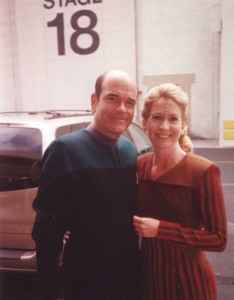
Robert Picardo and Debbie Grattan - Star Trek Voyager
Robert Picardo who played “The Doctor” and me

I did a lot of live theatre at the beginning (mostly unpaid) and in time I was fortunate to win a few TV acting jobs. The most notable (for coolness factor) was a little guest role on “Star Trek Voyager” in which I got to play a friendly alien, complete with bony facial makeup, who has a few lines with Capt. Janeway before being beamed down to my home planet (S7:E2 “Imperfection” for any Netflix streaming fans).

And yes, getting beamed down on a Star Trek episode is truly one of the most memorable things I’ve ever gotten to do in my acting career! I still get occasional requests from Trekkies for a signed headshot (some fans make it a hobby to collect headshots of every actor who has appeared in a Star Trek episode).

There were other TV series episode appearances along the way, a wonderful and rewarding run at South Coast Repertory, along with a slew of opportunities to do commercials, corporate and industrial videos and other on-camera work. These were all great experiences for me and helped to build my skills and develop my acting talents for the future.

No Business Quite Like Show Business

Show business is indeed a business. There are scores of great actors out there, who have honed their craft and can brilliantly play Willy Loman or Medea. Sadly, the majority still have a very hard time making a living as actors, and they have to hold part-time or full-time jobs to get through the slow times and just make ends meet.

In other professions, the more experience and skill that you have, the EASIER it is to find work. But in acting, and many other artistic endeavors, skills, talent and experience don’t automatically translate into an abundance of opportunities, jobs, or a livable income.

No Business Quite Like Show Business
Images by Ana Delao (photographer) and Cameron Stiehl (actress & model) http://www.cameronstiehl.com

In the internet age, an actor must learn and embrace the art of marketing along with the art of acting. The days of just waiting around for your agent to call you with an audition or booking are long gone. Today, an actor has to be their own agent, which adds one more huge challenge to the list of what makes acting a very tough profession.

Realize You May Be Treated Like You Are a Commodity

In many casting situations, actors are viewed as a commodity. This is especially true for voice actors. No matter how great of a voice an actor may have, there are ten more who can replace them in a heartbeat. Yes, there are a few extraordinary voices out there who are instantly recognizable. But, that doesn’t mean they can’t be replaced.

One area of exception is probably in animation, where a select few voice over actors can have very long term success with certain characters. Check out these multi-million dollar voices. If you are fortunate enough to land in this circle of actors, then you probably are about as irreplaceable as an actor can be. Count your blessings and buy your parents a new house!

Here are a couple of other factors that can make a voice over actor harder to replace:

1. They are connected with the branding and image of the company they are working for, so replacing them could cause some brand dis-association for customers.

2. They deliver great service and are very easy to work with, so they are unique and more indispensable in ways beyond just their voice over talents and acting abilities.

Up next, the final part of this three-part series: Life as a Working Actor Requires Perseverance, Tenacity and a few other qualities that may need to be developed.

Photo Credit: Will Act for Food is a photo essay collaboration between Cameron Stiehl and photographer, Ana Delao. Set in and around San Francisco’s Civic Center, this collection of photos shows the state of the arts in America where many artists either work at corporate day jobs, relegating their passion to hobby status, or face poverty. Please visit http://www.cameronstiehl.com for more information.

Filed Under: For Voice Over Talent

The Troublesome Plight of the Working Actor (and Voice Actor, Too)

June 8, 2015 by Debbie Grattan

The Troublesome Plight of the Working Actor (and Voice Actor, Too)

The 69th Annual Tony Awards aired last night, and being a Broadway nerd (my car radio is permanently tuned to the Broadway Channel on Sirius XM) I always enjoy the build up, listening to interviews with the nominees, and anticipating the live performances. It was a fun show to watch this year, with one of the best opening numbers in recent memory. My daughter, a child voice over talent, budding stage actress and fellow Broadway nerd, stayed up for most of it with me. It is so great to get to share my love of theater and acting with her!

With a child who has such strong interests and talents in performing, I think about the drive, luck and sheer determination required to get to Broadway (or any top acting gig), and the daily effort needed to maintain that level of success. It’s certainly not for the faint of heart.

As a profession, acting can lure you in with the excitement, the fun, the “glamour” and the promises of fame and fortune. But for most actors who set out on the journey with the goal of financially supporting themselves through their artistic talents alone, it’s a long hard uphill climb. There can be minimal rewards along the way and very little fame OR fortune at the end of the line. It truly is one of the toughest professions a person could choose, yet tens of thousands choose to jump in every year.

Why I Chose the Voice Actor Path Instead

The unstable nature of life as a working stage or screen actor is a big reason why I transitioned to the voice over acting profession many years ago. I could see the writing on the wall of what it was going to be like as a traditional working actor. Even though I had a strong passion for acting, I didn’t want to have to struggle that much. It’s hard to understand the downside of what it’s truly like (see awful things article) until you actually experience it.

I also had other goals, like starting a family and enjoying a full life beyond just my work. Those goals seemed to be in conflict with an acting profession, given the time, energy and sacrifices required to even attempt to reach the pinnacle as an actor.

I think trying to “make it” as a female actor can be especially challenging… The whole working mom thing is hard enough. But the working actor mom seemed exceptionally daunting and full of all kinds of uncertainties.

Voice Over Acting Has Always Had Its Advantage

Voice Over Acting Has Always Had Its AdvantageAt that time, (late 90’s) voice over acting was still fairly unknown and a welcome oasis from the competitiveness of stage and on-camera acting. Today, voice over acting has many of the same pressures as other forms of acting, mostly in terms of competition for work. The influx of new voice over actors entering the field and the fact that it is no longer under the radar as a profession, makes success even harder to come by and sustain.

Even so, compared to stage and on-camera acting, I believe there is still a higher likelihood of financial rewards and a slightly less desperate edge when it comes to landing jobs as a voice over actor.

The upside to the voice over industry is this: There is an ever-expanding amount of voice over work across many different applications, platforms and niches. While TV and radio commercials are still highly competitive and the place where voice over talents often try to make their mark, there are many other types of jobs (i.e. business narration, internet advertising, animation, telephony and audiobooks) that can pay an actor’s bills. The sheer amount of work in these other areas is vast and continues to grow. The number of opportunities for a successful voice over talent to make an income are relatively plentiful, especially compared to a queue down the block for an Equity casting call in NYC.

Since my goal from the beginning was always “to be a working actor” it is no real surprise that I eventually gravitated to a type of acting where the odds of making a good living were higher. Keep reading for part two… “The Working Actor’s Relentless Pursuit of the Next Gig” and why there really is “No Business Quite Like Show Business.”

Photo Credits: Will Act for Food is a photo essay collaboration between Cameron Stiehl and photographer, Ana Delao. Please visit http://www.cameronstiehl.com for more information.

Filed Under: For Voice Over Talent Tagged With: voice over career

5 Ways For Voiceover Talent to Ensure Stress Free Payment

May 28, 2015 by Debbie Grattan

5 Ways For Voiceover Talent to Ensure Stress Free Payment

In today’s world of VO, the successful voiceover talent is not only proficient in the art of voiceover, but he/she is also a savvy entrepreneur. The days of working only in a major market, through reputable talent agencies, and having billing go through a third-party (like the union/payroll service, agency, etc.) are forever changed for many talent. That type of payment may account for only a small portion of a voiceover actor’s income now.

Most of my work nowadays comes through production companies, advertising and marketing firms and corporate or small business voiceover clients. In this current voiceover marketplace, the voiceover talent has to be on top of the money game to ensure they get paid for their services.

How to Avoid Payment Issues

I’ve been working as a professional voiceover talent for over 22 years, and in all of that time, the total number of instances when I did not get paid for voiceover services delivered is less than ten. I’m VERY grateful for that fact. Considering that I’ve generated over ten thousand invoices, that’s a pretty staggering track record on the positive side!

In recent years, using PayPal and credit cards to secure the full payment before releasing final audio files has provided some accounting leverage. I use that approach with almost all new clients, many smaller-sized jobs, and nearly all voiceover clients located outside of the US.

The other main reason I think I’ve been able to avoid payment issues is due to the accounting system that I follow religiously. Here are the key things that I do to make sure the check is always in the mail, and ultimately in my bank account.

1. Send out invoices within a reasonable time-frame

My system is set up for Monday delivery of invoices for all jobs completed the previous week. My business manager (aka my husband) handles all the accounting, and employs a checklist-driven system to automate as much as possible. First thing on the weekly list is “Send Out Invoices.” Occasionally we send one even faster if a client needs that. And, when it comes to PayPal invoices, I always send those directly through PayPal as soon as possible, usually upon completion of the project and/or prior to delivery of final audio. So, a good rule of thumb would be “send invoices within one week of job date.” NO exceptions!

2.  Include wording in the invoice that explains what will happen if payment is not received within a specific time-frame

This gives me some leverage and recourse if a payment is overdue. The wording I use says basically, that prompt payment is appreciated and payments that are still outstanding after 60 days (from date of invoice) will have a late fee applied, which keeps increasing monthly until payment is made. You can determine the dollar amounts and/or percentages you want to use for the late fee (I use $20 per month or 2% interest per month, whichever is greater). This is a very standard practice these days, not only for voice over talents but for many other businesses as well. I rarely have to charge a late fee, but it’s good to have it there when I need it.

3. Have a professional, organized Accounts Receivables System

Whether you’re using a software program or doing the old school approach in a ledger, make sure you have an accurate, easy-to-use system for logging your payments as they come in. Since some payments come in electronically through PayPal or a merchant account service if you accept credit cards, you need to have a way to keep track of those digital notices too. Until fairly recently, we used to track payments in a ledger, which created a bit of redundancy, since we also use Quicken to send out invoices. But, when it comes to accounting, redundancy can be a good thing. That approach worked well for many years and we rarely had issues or errors. We now employ a similar method of tracking with the ledger now in an excel spreadsheet. The digital version offers additional useful benefits, such as being able to sort the data for tax purposes or other reasons. It doesn’t really matter what your system is, as long as it’s comfortable for you, and you can do what you need to do each week to keep track.

4.  Follow steps consistently when receiving payments

This may seem obvious but it’s actually worth mentioning. If you don’t have specific steps to follow, you can easily make an error, which will lead to additional work and hassle later on. You want your clients to trust that they’re dealing with a professional, who follows good business and accounting practices. Simple steps, done consistently, will ensure proficiency.

Examples of types of steps to follow are:

– Write the invoice number on each received check, so you can easily backtrack it later on if there is a question.

– Make copies of all checks before depositing.

– Always follow your sequence of steps in the SAME ORDER so it is habitual and consistent. If you have delegated accounting to someone else, make sure they are following a procedure, and not randomly skipping steps.

– Include the “payment received date” and check number in your accounts receivables log.

Keeping a detailed accounting of payments will save you time, energy and money. If you’re not a detail-oriented person or you don’t like tracking things like this, find someone who can help you and pay them to do the job! I can personally recommend Tina Maloney, the VO Helper, who has many great skills and loves to work with the numbers. There are other virtual assistants out there who can assist with accounting. If all else fails, marry an accountant!

5.  Watch the 30 day deadline like a hawk

For me, it’s 30 days from the invoice date. You may prefer a deadline that is shorter or longer depending on the types of clients you work with. From our software and even in the old ledger book, we can easily see when a payment has crossed the 30 day threshold for payment. An email is sent out to all clients who reach this point to follow-up on payment status.

voiceover talent payment due dateIt’s a very polite and friendly message (and not automated), and it almost always generates a reply with a status update of when we can expect the check. If we don’t get a reply, we re-send again the following week. After three attempts, we get on the phone and get more urgent with our communication. But, we always are polite and professional with how we communicate. Here’s a very good article that covers the importance of being polite in these situations.

You may notice that my late fee doesn’t apply until 60 days, but I contact the client at the 30 day mark. This is because, I want to make sure the payment is in process at 30 days. Sometimes the original invoice didn’t get to the right person. At 30 days, I feel comfortable checking in to make sure the ball is rolling, and to find out when I can expect a check to arrive. Keep in mind, I don’t do this myself, I have my accounting support person handle this correspondence.

Another added benefit of having someone else followup on late payments is that I can avoid having unpleasant mental associations with certain clients just because they are late in paying an invoice. It’s easy to fall into that trap and start to feel a little resentful about so-and-so not paying up when you distinctly recall turning around his or her project on a dime and totally over-delivering on the voiceover services end! It’s better if I personally don’t know who is late in paying bills in the 30 – 90 day late window. I sleep better, I avoid negative emotions spoiling my day, and in general, I’m able to feel very good about all of my clients. Knowing that I have someone tracking this and following up on my behalf keeps me out of the whole conversation. In this case, it is true that ignorance is bliss!

An Organized Accounting System Pays Dividends

While staying on top of your accounting system and procedures does take some consistent work and follow-through, the results are hugely worth the effort, and will have a positive impact on your productivity and overall mental state. And, as voiceover talents, keeping that positive mental attitude is a critical part of success over the long run.

Please share any additional accounting procedures that you find work well for you. I’d love to hear about your ideas and experiences!

Filed Under: For Voice Over Talent

8 Tips for Directing Voice Over Talent – What You Can Do BEFORE the Session

May 14, 2015 by Debbie Grattan

8 Tips for Directing Voice Over Talent

Have you ever felt “over your head” in a VO session while trying to direct voice over talent? Or perhaps you’ve underwhelmed with the final recording from your selected talent, even though you thought you gave them proper direction.

Getting exactly what you want from a voice over performance starts even before your VO talent sits down at the microphone. Here are a few easy things you can do before you get into the session that will help to guide you and your voice talent to the best possible end result.

Experienced voice over talent may not require much directing at all, although it never hurts to cover your bases to ensure your end result is exactly what you’re looking for. Even with more than 20 years in the industry, I typically prefer to do a phone patch with new clients (and repeat clients when they have requests that are outside the norm), just to make sure we’re both on the same page. And getting on that page is easy when clients provide some essential information before the session.

As a bonus, use this one-page checklist to help you remember everything mentioned in this post.

Before Directing Voice Over Talent, Provide This Info

1. Identify the Talent’s Role: Is your talent playing the bold announcer? The knowledgeable educator? The gentle best friend? Let them know the role the voice is playing. Experienced voice over actors will create their own personal back story to get into that role and execute it with conviction.

2. Give a Clear Rundown on Your Audience: What will the VO be used for? Where will it be played? Who are we talking to?  Although these might seem obvious to you, they may not be obvious to the voice over talent. Certainly, announcing speakers at a conference of toy manufacturers would have a different feel versus narrating a video for buyers of a luxury car.  These questions also play a part in pricing, so they need to be discussed before the session and even before the price is set. Share specific details about your target audience to ensure the talent knows to whom he or she is speaking.

3. Describe Your Desired Sound: Use highly specific descriptive words to indicate how you want a script to sound. Good choices are words like warm, friendly, concerned, emotionless, comic, serious, quirky, hip, brassy, sassy, movie-trailer big. Not-so-good choices are words like nice, flat, conversational. These tend to be much too general and open to many differing interpretations. Even though most experienced voice talent will have a pretty good idea of where to start, I often tell clients, I’m not a mind reader, and there can be varying levels of “friendly” which may or may not fit with the idea in your head.

Another ideal way to dial in on what you want your script to sound like is to fill in three blanks with one-word answers:

This read should sound ____ (ex: uplifting).8 Tips for Directing Voice Over Talent Before the Session
This read should not sound ____ (ex: serious).
The listener should feel ___ (ex: inspired).

4. Cite Some Specific Examples: Review the voice over talent’s audio and video portfolio so you can reference a specific voice over demo or sample that your talent has already created. Or, you could provide a link to an audio or video of someone else who has the desired sound. I get scripts sent to me all the time that have minimal direction but reference a particular demo on my website for the vocal delivery they want. That always makes it very easy for me to know exactly how to nail their desired delivery.

5. Video, Slide Show or Music: It helps immensely when the talent knows the visuals and music that will be paired with his or her voice. If a picture is worth 1,000 words, then a video is worth 100,000 words and the music is worth about 50,000 (give or take a thousand). I’ve even recorded VO with the background music in my headset, to get me in the proper mood during the session. It’s a great trick, if you can make that available to your chosen talent before or during the session.

6. Provide a Script That’s Really Ready: Read your script out loud, noting any tricky words, uncommon names or desired pronunciations. Phonetic spelling is good, and showing rhymes for a specific word or syllable is even better. You might even catch grammatical errors, which will save time during the session. Outline direction for:

  • Numbers, including phone numbers (5500 = five-five-zero-zero OR fifty-five hundred OR five-five-oh-oh)?
  • Words with multiple pronunciations, such as “either” or “neither”
  • Pronunciation of people’s names if the name is difficult, unusual or strays from typical pronunciation
  • Unfamiliar words, foreign phrases or other items that could benefit from clarification

Get additional tips for readying your script from my blog on Voice Over Mistakes to Avoid.

7. Be Clear on Timing Specs: If the voice track needs to be timed to a video or fit a specific timeframe, make sure you give the talent a head’s up in advance. Most pros work with stopwatch in hand and are extremely aware of how to fit copy into the desired timeframe. But also, make sure that the copy can fit into the timeline.  It can be frustrating to talent when they get a :30 spot, that’s way over-written.  Do your best to provide an accurately timed script.

8. Use Brackets for Direction: If certain parts of the script require voice over acting moments, use brackets to outline specific emotions and tones to hit at those points. Remember to keep those emotions and tones very specific, avoiding the too-general terms like “nice” or “conversational.” Try terms like “happily surprised,” “shocked and angry” or “unemotional and stoic” instead.

Regardless of the type of direction you’re providing, it’s important to be clear, specific and concise. Ambiguity, contradictions or way too much direction can only lead to frustration and confusion on both sides of the fence. Our goal as voice-over actors is to deliver the best possible performance in the shortest amount of time.

Proper direction ensures that “best performance” happens in every session!

Download: “The Voice Over Talent Director’s Checklist”

Be sure to also read Part 1 of this series: “How to Get the Best Voice Over Talent Performance: Choosing Talent“

Filed Under: For Voice Over Clients Tagged With: voice over talent

How to Get the Best Voice-Over Talent Performance: Choosing Talent

April 22, 2015 by Debbie Grattan

Tips for Choosing the Best Voice-Over Talent

Raise your hand if you ever turned off the radio, TV or Internet video just because you didn’t like the sound of the person speaking? Most of us probably have, proving that the voice-over read of any given project can make or break that project’s success.

A high-quality voice track is a key part of the communication of the message, and that communication involves a lot more than just the words being spoken. Combined with the visuals and music, the voice-over read is what pulls the entire presentation together in the heart and mind of the audience. Five tips can help you find the best voice-over talent to pull your next project together with panache.

1. Look for Experience

Years of experience means years of honing and perfecting their voice and skills. Look for someone who has many years of experience in general and, ideally, a reasonable amount of voice-over experience with the type of project you’re producing.

While there may be certain situations where the particular sound of a voice outweighs the need for a long track record, an experienced pro is typically the way  to get the most effective execution of your script. Remember, it’s about more than simply reading the words, but using the voice as a tool to engage with your audience. The pros have mastered this art, and it’s a lot trickier than one might think.

2. Know the Role Your Talent Will be Playing

Some projects need a knowledgeable educator who instructs the audience. Others need a narrator who tells a story, a spokesperson who promotes the product, or an announcer who presents information in an impartial and authoritative way.

Or maybe you need the gal or guy-next-door kind of voice, as someone speaking to friend. One of the latest industry trends has been choosing voices that sound the most like your target audience, which would involve finding a talent with who can reproduce the overall tone and speech patterns as your ideal customers.

Understanding the role the voice-over talent will play in your particular scenario, will help you pinpoint the type of voice that can deliver it with conviction.

3. Determine if You Need Someone With Strong Acting Abilities

There is a big difference between voice-over talent and voice-over actors. Voice-over talent may only be accustomed to reading straight narrative copy, or simple announces, and may be uncomfortable being asked to produce multiple reads for character lines, or something that  involves emotive ability.

Voice-over actors, on the other hand, are often thrilled to do multiple takes in a variety of characters. They are generally backed by acting training and improvisational experience that lets them serve up numerous variations on the same line, if the first take doesn’t sound quite right.

The terms “voice actor” and “voice talent,” are often used interchangeably on websites and in marketing, making it hard to know for sure at a glance. So, if you need a real voice-over actor for your project, double-check that they have actual acting training and experience. You should be able to find that in their bio or just ask them directly for details on their acting background.

4. Take a Look at Some “Real” Project Samples, Not Just Demos

While a high-quality VO demo may sound good at a quick listen, it’s important to remember that what a demo provides is a quick earful of what the talent can do, in very controlled circumstances.

However, real-world project samples are the proof of successful projects the talent has actually done. They showcase the actor’s voice in jobs they were actually hired to record. A professional voice talent will usually have samples showcased on their website or have a playlist (or 2 or 20) on YouTube and/or Vimeo.

Producing a demo often involves hours spent in the studio crafting and fine-tuning the voice-over reads until they have just the right inflection – and then audio processing the clip for a professional sound. Project samples are real-life clips of what the talent can do under pressure, time constraints and following other stipulations set down by the client, and give a better indication of what the talent really brings to the table.

5. Evaluate the Fit

Evaluating the overall fit of the voice-over talent means making sure the voice meshes with your audience and subject while providing the credibility and quality you need.

A high-pitched, squeaky voice, for example, may not be the right fit for your sophisticated, high-tech product. And a deep, resonating, authoritative voice may send kids screaming for cover if you use it to sell children’s toys.

Another important element of a good fit is the connection between you and the voice talent. The most successful business relationships typically occur when both parties are authentic, share the same goals and values, and exhibit mutual respect. Even if a person happens to have what you think may be the perfect voice for your job, the fit may be less than perfect unless you click on a personal level.

Of course, there are many more criteria used to forge the perfect fit between client and voice-over actor, but these 5 steps are a good start to get you on solid footing from the outset.

Just as the voice-over talent does more than simply read some words, choosing the best voice-over talent for your project involves much more than deciding between male and female and calling it a day. These five tips can give you a solid path to follow to ensure your project is graced with the voice it needs – and your audience stays tuned in to listen to your message and take action.


Filed Under: For Voice Over Clients

  • « Go to Previous Page
  • Page 1
  • Interim pages omitted …
  • Page 23
  • Page 24
  • Page 25
  • Page 26
  • Page 27
  • Interim pages omitted …
  • Page 41
  • Go to Next Page »

Primary Sidebar

"*" indicates required fields

This field is for validation purposes and should be left unchanged.

Bring Debbie the details of your next commercial, narration, phone system recording or other voiceover project. Receive a detailed quote, custom audition, and the ultimate in voice quality.

CONTACT ME

REQUEST A DETAILED QUOTE
REQUEST AN AUDITION

CATEGORIES

  • For Voice Over Clients (144)
  • For Voice Over Talent (129)
  • Fun Stuff (10)
  • Uncategorized (2)

Search for:

Recent Posts

  • The Ultimate Guide to Remote Voiceover Direction: Tools, Best Practices, and Studio Standards
  • The Role of the Professional Voice Actor in an AI-Generated Media Landscape
  • Here’s the Coolest Pickleball Commercial That I Missed Out On
  • Keep the Awards Coming! VO Projects Win Big in 2025
  • Republican Negative Political Narration

Recent Blog Posts

  • Here’s the Coolest Pickleball Commercial That I Missed Out On
  • Keep the Awards Coming! VO Projects Win Big in 2025
  • The Impact of Rock Radio Imaging
  • Here’s the Coolest Pickleball Commercial That I Missed Out On
  • Keep the Awards Coming! VO Projects Win Big in 2025
  • The Impact of Rock Radio Imaging

1-866-DGVOPRO

Debbie Grattan is a top-rated professional female voice over talent with more than 25 years of experience delivering voice over services worldwide. She regularly records commercial voice overs for radio and tv as well as infomercial voice overs and direct response marketing for children's toys, health, fitness and beauty products. Other specialties include female narration voice overs for corporate narration, web videos, tutorials, explainer videos and technical medical narration. Debbie also provides phone-related voice over services including phone prompts, messages-on-hold and outbound phone marketing for companies in the United States and Canada.

Debbie Grattan Voiceover Talent source-connect
Debbie Grattan Voiceover Talent WoVO

© 2001 - 2026 Debbie Grattan Voiceover Talent | Site Map | Privacy Policy
Website Hosting by UpperLevel Hosting

  • HOME
  • DEMOS
  • ABOUT
  • SERVICES
  • BLOG
  • CONTACT