Debbie Grattan Voiceover Branding Logo
  • HOME
  • DEMOS
  • ABOUT
    • BIO
    • RECENT PROJECTS
    • TESTIMONIALS
    • CLIENTS
    • WHY HIRE DEBBIE
    • STUDIO SPECS
    • RESOURCES
  • SERVICES
    • SERVICES
    • COMMERCIALS
      • COMMERCIALS
      • HEALTH & MEDICAL
      • AUTOMOTIVE
      • BUSINESS & CONSUMER
      • CHILDREN’S PRODUCTS
      • POLITICAL
      • INFOMERCIALS
      • RADIO SPOTS
    • NARRATION
      • NARRATION
      • CORPORATE VIDEOS
      • HEALTH & MEDICAL
      • TECHNICAL
      • E-LEARNING
      • WEB VIDEOS
      • EXPLAINER VIDEO
      • TRAVEL & LEISURE
    • INFOMERCIALS
      • INFOMERCIALS
      • CHILDREN’S TOY
      • BEAUTY AND COSMETIC
      • HEALTH, FITNESS & OTHER
    • CHARACTERS
      • CHARACTERS
      • ANIMATION VOICE OVER
      • ACCENTS & DIALECTS
      • ON-CAMERA ACTING
      • CHILD TEEN VOICEOVER
    • PHONE RELATED
  • BLOG
  • CONTACT
    • CONTACT DEBBIE
    • REQUEST A QUOTE
    • REQUEST AN AUDITION

VERSATILE

EXPERIENCED

PROFESSIONAL

1-866-DGVOPRO

Debbie Grattan

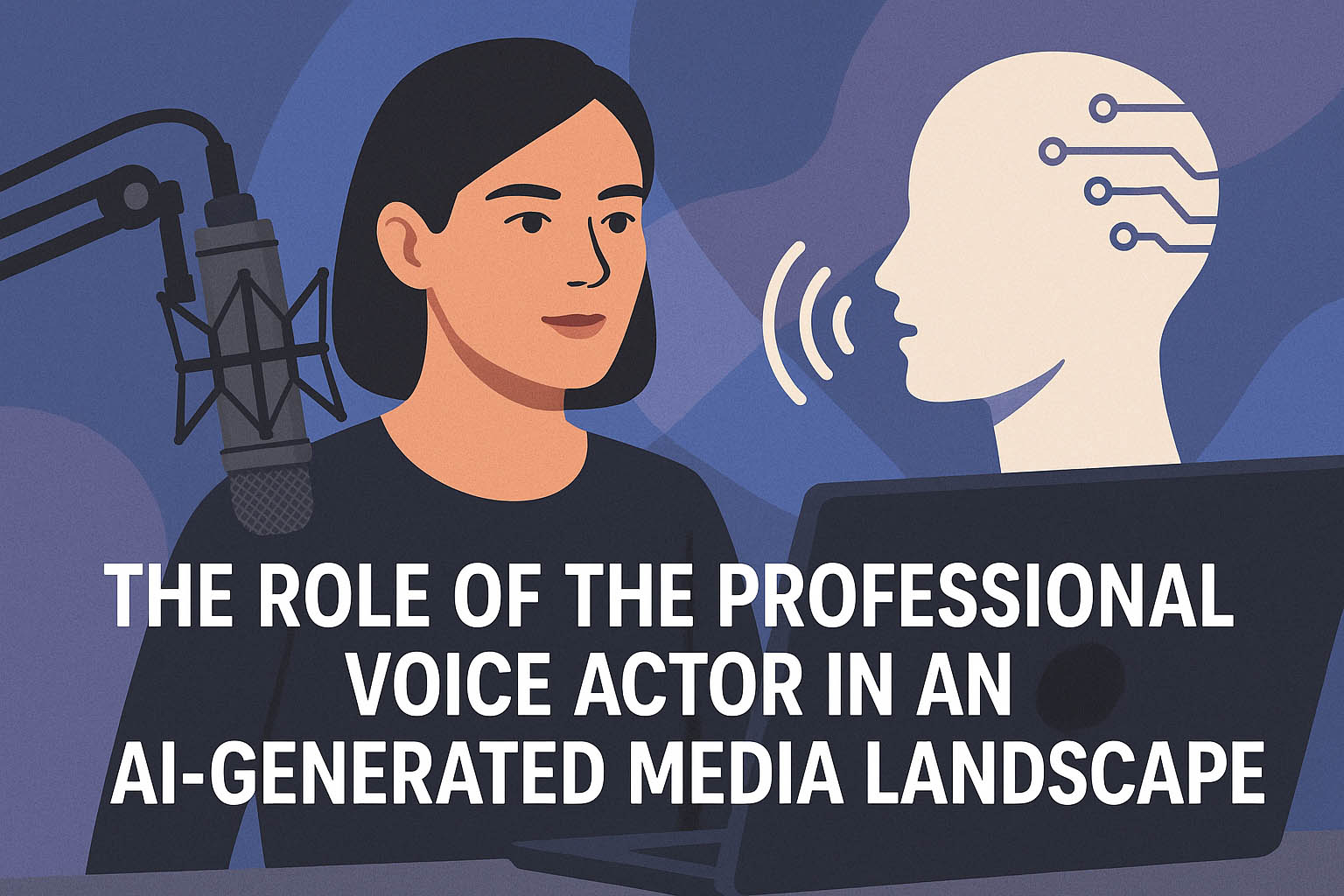
The Role of the Professional Voice Actor in an AI-Generated Media Landscape

October 29, 2025 by Debbie Grattan

Voice Actor in an AI-Generated Media Landscape

The Changing Face of Voice Work

When I first stepped into a recording booth years ago, the only thing competing with a voice actor’s delivery was the quality of the microphone. Producers hired people, not programs. Every read came from a person’s lungs, heart, and mind — not a data model. But today, the media landscape looks entirely different. Artificially generated voices have entered the scene, and they’re not whispering. They’re speaking in full sentences, sometimes with tone and rhythm that make even seasoned producers pause.

That shift has raised a question that ripples through every corner of our industry: where do professional voice actors fit in a world where synthetic voices can be created in seconds? I think about that question often — not with fear, but with focus.

The truth is, this change isn’t the end of our profession. It’s a transformation of how our voices are used, valued, and protected. AI voice tools have made production faster and more affordable in some cases, but they’ve also reminded clients and audiences of something machines still struggle to replicate: authenticity. When a company wants a believable spokesperson, a heartfelt narrator, or a voice that makes people feel something real — they still turn to human talent.

So while technology is evolving, so is our role. A professional voice actor today isn’t just a performer; we’re part storyteller, part strategist, and part brand guardian.

What AI Voice Tools Can and Can’t Do

There’s no denying that synthetic voice tools have gotten smarter. I’ve listened to samples that, on first impression, sound almost convincing. They hit the right pitch, pause in the right places, even add what could pass for emotion. But then, something feels off — like hearing someone read a script without understanding what the words mean. The emotional current is missing.

AI voice tools can mimic tone and speed, but they don’t interpret context. They can’t ask, “What’s the motivation behind this line?” or adjust delivery based on a client’s creative direction. When a company records a national ad or an eLearning series meant to keep people engaged for hours, those subtle human instincts matter. They decide whether the listener stays tuned in or tunes out.

What these tools can do is fill certain gaps. They can generate placeholder reads for drafts, help creators test timing, or assist in projects with limited budgets. In that sense, they’re like a rough sketch before the final painting. But they don’t replace the artistry that gives meaning to the words.

A voice actor interprets, reacts, and adjusts in real time. I might change the weight of a single word to shift the entire message. That’s something a machine doesn’t understand because it doesn’t feel the difference between sincerity and sarcasm, confidence and compassion. It doesn’t understand why a pause can carry more emotion than a line of dialogue.

As producers learn where these systems fall short, they’re starting to see the new balance: technology for efficiency, humans for connection.

Why Authenticity Wins the Audience

When you’ve been in front of a microphone long enough, you start to recognize what audiences respond to — and what they don’t. People connect to imperfections, to little hesitations and breaths that make a read sound alive. Those things don’t fit neatly into data points, but they make all the difference.

I’ve had producers tell me they can spot a cloned voice the moment it starts. It’s not that the synthetic version sounds bad; it just sounds flat. The cadence is too clean, the pitch too stable, the emotion too calculated. The human voice, on the other hand, carries natural variation — subtle fluctuations that mirror how people actually speak. When a voice actor delivers a line about loss, humor, pride, or excitement, there’s an emotional memory behind it. Listeners can hear that.

Think about the difference between reading a text message that says “I’m fine” and hearing someone say it out loud. The tone changes everything. That’s what keeps voice actors essential. We don’t just read words; we interpret them. We give context and emotional shape to ideas.

In advertising, that authenticity builds trust. In audiobooks, it keeps a listener turning pages. In training videos, it prevents monotony from dulling important information. A machine might say the same words, but it won’t make you care.

That’s why brands are becoming more cautious. They know audiences value transparency, and if something feels artificial, they’ll tune out — or worse, stop trusting the message. Real voices, real reactions, and real intention still win every time.

Collaboration, Not Competition

I don’t see synthetic voice tools as the enemy. I see them as a new instrument in a much larger orchestra of media production. They’re not going away, and pretending they don’t exist doesn’t help anyone. What matters is how we, as professionals, choose to use them — or not use them — to strengthen what we already do best.

Some of my clients use AI voices for internal drafts or product demos. That’s fine. It gives them a rough idea of pacing or tone before they call me in to record the final version. When I step in, my job is to bring the piece to life — to add the rhythm, emotion, and personality that a computer can’t. In that sense, AI doesn’t replace me; it sets the stage for me to perform at my best.

There’s also a growing opportunity for collaboration. Voice actors can partner with technology rather than fight it. For example, using AI-assisted editing or transcription tools saves time in post-production. Voice-over professionals can manage multiple projects more efficiently while keeping their performance at the center.

That said, collaboration doesn’t mean compromise. I’m careful about how my voice data is used and who has access to it. Every actor should be. We’re not just protecting our income — we’re protecting our vocal identity. A voiceprint is as unique as a fingerprint, and once it’s digitized, it needs to be guarded.

So this moment in our industry isn’t about losing ground; it’s about redefining it. The best voice actors are learning where the new boundaries are, how to adapt workflows, and how to ensure technology serves creativity, not the other way around.

Building a Future-Proof Voice Acting Career

If there’s one thing this industry teaches you, it’s that adaptation isn’t optional. The tools change, the platforms shift, and the expectations evolve right along with them. That’s not new. What’s new is the pace — and the stakes.

To build a voice acting career that stands strong in an AI-driven market, I’ve learned to treat learning as part of the job. Staying curious is just as valuable as staying consistent. I pay attention to how studios, eLearning developers, and ad agencies are integrating synthetic voices. Understanding their reasoning helps me position myself as part of their solution, not an outdated alternative.

Diversification is also crucial. A professional voice actor today can’t rely on one niche. I record for national commercials, corporate explainers, medical narrations, and audiobooks — and each of those areas is shifting in its own way. Some sectors experiment with digital voices for short-term use, while others depend entirely on human tone and empathy. By working across different markets, I protect my income and expand my creative range.

I also make sure my voice isn’t being used in ways I didn’t authorize. That means clear contracts, usage clauses, and client transparency. It’s about setting boundaries early, not after the fact. As technology advances, protecting your voice will be as important as training it.

There’s another side to future-proofing that doesn’t get mentioned enough: personal branding. The stronger your professional identity, the harder it is to replace you. Producers hire people they trust — people whose sound, reliability, and communication make projects easier. That’s something no technology can automate.

For voice actors who stay curious, professional, and protective of their craft, this new era isn’t a threat. It’s a turning point.

Why Human Connection Still Matters Most

Every voice actor I know has had that moment — when the script, the tone, and the message line up perfectly, and you feel it in your chest before the words even leave your mouth. That spark is what connects us to listeners. It’s also what separates a performance from a recording.

Clients sometimes ask if I’m worried about being replaced. The truth is, I’m not. Technology can copy the sound of a voice, but not the thought process that shapes it. When I read a line, I’m not just reacting to punctuation or pacing; I’m reacting to meaning. I picture who I’m talking to. I think about what they need to hear. Machines process data; humans process emotion.

That emotional instinct is what gives voice actors staying power. In storytelling, marketing, education — anywhere words need warmth and credibility — people still crave a real connection. They want to hear intention behind the message. They want to feel like someone understands them.

This is why producers keep coming back to human voices. They know that trust is built person to person, not algorithm to user. A voice actor turns information into conversation. We make people care about a message, not just hear it.

So as media continues to blend human and synthetic elements, the goal isn’t to fight progress — it’s to keep the human voice at the center of it. That’s where emotion, trust, and meaning live.

As for me, I plan to keep doing what I’ve always done: use my voice to tell stories that connect, inform, and inspire. The tools may change, but the purpose stays the same.

FAQs

What role do professional voice actors play in the age of AI?

Professional voice actors bring context, empathy, and creative judgment that synthetic voices can’t match. Technology can imitate tone, but it doesn’t understand emotion. Human performance still drives engagement and trust in advertising, narration, and storytelling.

Can AI replace real voice talent?

It can replace certain short-term or low-budget applications, but not authentic storytelling. Producers continue hiring professional voice talent because audiences respond to sincerity and emotional depth — something AI systems can’t replicate.

How are voice actors adapting to new technology?

Many of us use AI tools for editing, timing, or transcription, but not for replacing performance. Adapting means learning how technology fits into production while protecting our vocal identity and creative value.

Why do clients still prefer human voices for major projects?

Because human voices connect. They carry subtle timing, tone, and emotional understanding that make a message believable. A listener can tell when a person means what they say — and that authenticity builds loyalty and credibility.

Filed Under: For Voice Over Clients, For Voice Over Talent, Uncategorized

Here’s the Coolest Pickleball Commercial That I Missed Out On

October 16, 2025 by Debbie Grattan

It’s sleek. It’s smooth. It features the world’s top women’s pickleball player, 18-year-old Anna Leigh Waters, promoting Paddletek pickleball gear. It also features a female voice over talent with just the right tone delivering just the right message – a voice over actor that could have been me.

The “it” in this case is the short, sassy and highly effective “Paddletek | Not A Real Sport” video seen below.


Yes, I was kicking myself (gently) for not even getting an audition for the project. Not because I feel I am the one and only voice over talent that could have narrated the video – but because I regularly play pickleball with Paddletek President and CEO Curtis Smith.

Geesh! Talk about a missed opportunity.

Granted, there may be a ton of cooks in the kitchen when it comes to hiring voice over actors for their company projects. While Curtis remains involved in Paddletek, the company itself was sold to Thirty-5 Capital and has operated as a part of United Pickleball Paddles (UPP) since last year.

The video allocates credit to three different entities: the advertising agency of Young & Laramore, the music agency of Songs For Film & TV, and the music sync and streaming-related services provider of Checked Label Services.

Curtis could have been far removed from the entire auditioning or video creation process. But that’s not the point. The point is that I don’t recall ever even mentioning that I have been a successful voice over artist for the past 25+ years.

Thankfully, the gentle kicking of myself stopped rather quickly. It instead morphed into a big lesson that I want to share with everyone:

You never know when mentioning your occupation or career path could lead to great opportunities – so make it a habit to mention them regularly.

This is not to say you need to hold up the grocery line by giving the cashier your entire work history – but it is to emphasize the importance of spreading the word about who you are and what you do. You never know who’s listening!

How to Market without Marketing in Daily Interactions

The first suggestion for spreading the word about your career is to get rid of the “marketing” mindset. You are not plugging your products or services. You are simply inserting information into the conversation to give people a better idea of what you’re all about.

One of the easiest ways to do this is to start by asking the other person about their own interests, hobbies and careers. You can then reciprocate by sharing the same information about yourself.

When it’s time to mention your job or career, don’t just leave it a one-sentence title. Flesh it out by showcasing a problem you solve, the passion or enthusiasm you have for what you do, or an exciting project you are working on.

Examples can include:

  • Problem you solve as a writer and editor: I help people transform what’s in their heart into words to be read by the world.
  • Passion you have as a voice over talent: My favorite part of my job is being able to embody the personality of a brand through my voice.
  • Enthusiasm you have as a shoe salesperson: Nothing beats the smile on people’s faces when they have happy and fashionable feet.
  • Exciting project you’re working on as an artist: As an animal lover, I am so excited to have been chosen to paint a wildlife mural on the wall around the nature preserve.

Keep the conversation going by asking the other person about the problems they solve, the passions that fuel their projects, and the exciting creations on their agenda.

How to Spot Opportunities

Paying attention to everything around you is not only a good practice for fully experiencing life, but it can do wonders for opening you up to business opportunities. Things to look for can include:

  • Everyday inconveniences and problems that beg for the solution you offer
  • Not-so-obvious situations where what you offer could be relevant or helpful
  • Opportunities to share your knowledge and info in your field
  • Chances to ask for input or feedback from others on something you’re creating or working on
  • Giving people a sample of your services or expertise at no charge

Additional Tips for a Highly Specific Niche

Some occupations, products and services are more popular or in-demand than others. Everyone wears shoes, much to the delight of the shoe salespeople. But not everyone will need voice over work, which means we voice over artists – and others in highly specific niches – need to get a bit creative.

One of the best suggestions here is never to force a mention of your occupation when it feels awkward or stilted. Instead, focus on listening intently to others, dropping a mention when it feels natural and right.

Storytelling is another way to highlight your profession in a conversational manner. Perhaps you have a strange, applicable, hilarious or lesson-learning story that involves one of your projects that aligns with the conversation’s topic.

If kids are around, practice one of your kid-friendly voices to relate to the children. Then mention how much fun it is to have a job where you get to create different voices.

Trends are another topic that can connect with what you do. Animation, for example, is experiencing a huge surge in demand and popularity. What a perfect place to note that you had the pleasure of voicing one of the most amusing animated projects this year.

If you’re in a setting where an ad comes on, there’s your opening. You can talk about the narrator’s voice and how important it is in your line of work. You can also share about one of the most amusing commercials you worked on recently.

The same type of conversational flow can be created when other topics or examples come up. These can include audiobooks, podcasts, documentaries, infomercials or even really bad robocalls. There’s your chance to point out what would make for a more engaging automated phone call or system.

Keep Your Antenna Up for Related Professions

One more tip that applies to every profession is to keep your ears open for those in related professions. You can inquire about some of the current projects they are working on, then ask how they typically go about securing the services you provide when those services are needed.

For voice over artists, this could include video production companies, advertising agencies, marketing departments and, yes, company presidents and CEOs on the pickleball court.

Although I missed out on the “Paddletek | Not A Real Sport” video, hopefully what I’ve learned and shared gives us all a greater awareness of the importance of mentioning our professions to those around us.

And it also left me with an automatic conversation starter the next time I see Curtis. After complimenting the great job on his company’s video, I can ask about the process for possibly auditioning for additional projects down the line.

Filed Under: For Voice Over Clients, For Voice Over Talent, Fun Stuff Tagged With: Featured, Featured Commercial

Keep the Awards Coming! VO Projects Win Big in 2025

August 22, 2025 by Debbie Grattan

Photo from mechwestshow.com

As if doing voice over for animation projects isn’t enough fun on its own, it becomes even more exciting when those projects win multiple awards. Just ask my daughter Natalie Rarick. She was part of two projects that recently scooped up a number of honors from three notable organizations. The projects are:

Teek and Tom Explore Planet Earth

Available on the NOAA website, this five-part animated series explains the ocean’s influence on our planet’s weather and climate. Natalie was the voice of Teek, a curious one-eyed purple alien who asks a zillion questions of NOAA climate scientist Tom Di Liberto. See our previous post here.

MechWest

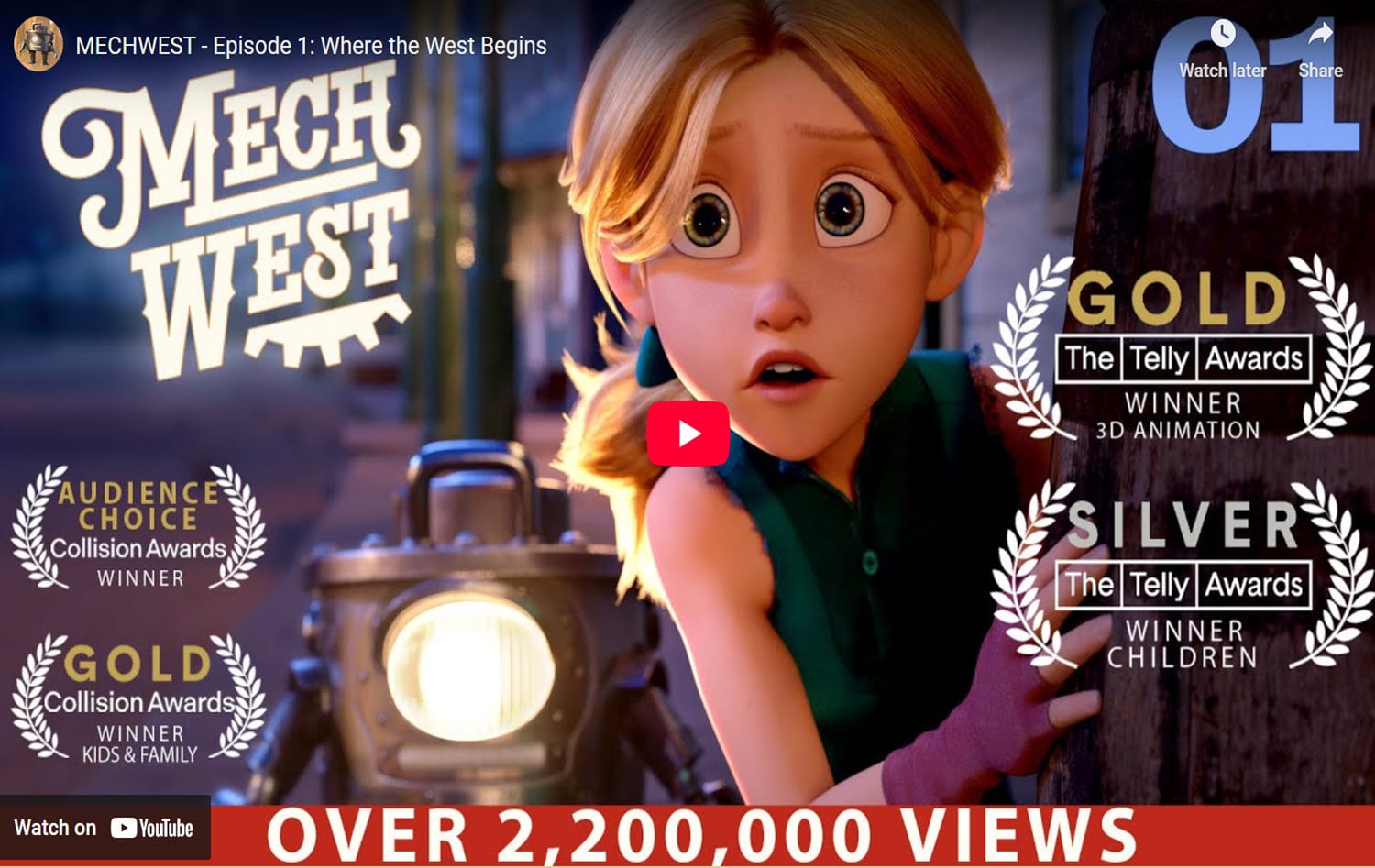
Natalie and I both had the pleasure of working on MechWest, a cartoon world where robots, called mechs, meet the Wild West. Natalie is the voice of “Pearl,” one of the main characters of the series. I got to play some bit parts and help out with some of the VO session directing. The series was created by a father-son team. See our previous post here.

Photo from oceantoday.noaa.gov

Awards for ‘Teek and Tom’

The National Oceanic and Atmospheric Administration (NOAA) definitely had an out-of-this-world hit with “Teek and Tom.” The project scored nine awards and a slot in the finalist category for an additional honor.

Telly Awards 2025

  • Gold – Sound and Sound Design (Episode 1)
  • Gold – Voice Over and Narration (Episode 1)
  • Silver – Education and Discovery (Entire Series)
  • Bronze – Craft-Fully Animated Piece (Episode 1)

It was heavy metal across the board with the Telly awards scored by “Teek and Tom.” The show brought home two Gold awards, one Silver and one Bronze.

Collision Awards 2025

  • Silver – Kids and Family, General category
  • Silver – Character Design, Craft category
  • Silver – Music
  • Silver – Voice Acting

“Teek and Tom” swooped up four different Collision Awards in the Silver category, including one for voice acting.

Shorty Awards 2025

  • Bronze – Audience Honor for Animation
  • Finalist – Government and Politics

Teek would be thrilled that the show was up for two Shorty award categories, with public votes helping them win one and place as a finalist in the other.

Mech West branding for mother daughter voiceover interview

Awards for ‘MechWest’

Robots in the Wild West are apparently wildly successful, as evidenced with the four awards bestowed upon the “MechWest” series.

Telly Awards 2025

  • Gold – Craft, 3-D Animation (Episodes 1 and 2)
  • Silver – General, Children

Episodes 1 and 2 snagged Gold awards for the specialized category of 3-D Animation. The entire series was honored with a Silver award for being one of the top shows created for children this year.

Collision Awards 2025

  • Gold – Kids and Family, General category
  • Audience Choice

“MechWest” lassoed in both the Gold and Audience Choice awards in the kids and family television category.

What the Awards Signify

Telly Awards

Recognizing excellence in the television and video industry, the prestigious Telly Awards signify recognition for a project’s originality, quality and creativity. Part of the prestige comes from the panel of 200 judges, industry experts from major production companies, streaming services and television networks.

Collision Awards

Given for excellence in animation and motion design, the Collision Awards are also chosen by a judging panel of industry experts. These prestigious honors signify a high level of recognition and achievement in the industry, highlighting projects that exhibit strong technical talent and creativity.

Shorty Awards

These international awards acknowledge and celebrate the best in digital and social media across the globe. The Shorty Awards highlight innovation and creativity, honoring projects that shape how people interact and connect in the online world.

Photo from oceantoday.noaa.gov

Collaboration at Its Best

Both “Teek and Tom” and “MechWest” are not only entertaining and captivating, but they truly illustrate what can happen when talented professionals work together to create something truly magical. Congratulations to everyone who contributed to the projects – and if you haven’t seen them yet, do take a gander at these award-winning shows.

“Teek and Tom” on the NOAA website: https://oceantoday.noaa.gov/teekandtom/

“MechWest” website: https://mechwestshow.com/

Filed Under: For Voice Over Clients, For Voice Over Talent, Fun Stuff Tagged With: Featured, Featured Character

Republican Negative Political Narration

June 19, 2025 by Debbie Grattan

What Is Republican Negative Political Narration, Really?

Let’s be honest, politics isn’t always sunshine and campaign balloons. Sometimes, you’ve got to shine a light on the messy parts. Republican negative political narration refers to the type of voiceover work that critiques or questions decisions, actions, or candidates associated with the Republican Party. It’s not about shouting into a void or ranting with a megaphone, it’s about delivering a serious message with clarity, poise, and purpose. That’s where Debbie Grattan steps in. She’s got the kind of voice that can cut through the noise. Its measured, credible, and never over-the-top. When the script calls for honesty without hysteria, Debbie brings it.

Statue of Liberty representing the Republican Negative Political Narration article.

Why the Right Voice Matters in Political Narration

Political narration, especially on the negative side, is a bit of a tightrope walk. You need to communicate real concerns without sounding like you’re reading from a scorched-earth playbook. A heavy-handed voiceover can turn people off fast. But a balanced one? That makes folks lean in. Debbie Grattan has been working in political narration long enough to know the difference. She knows how to approach a sensitive script whether it’s calling out hypocrisy in a recent policy shift or highlighting inconsistencies in a candidate’s record, without turning the audience into skeptics.

Getting the Tone Right (Without the Drama)

This type of narration isn’t about stirring up drama or throwing punches. It’s about holding attention while delivering a pointed message. So yes, there’s a very fine line between being firm and being abrasive. Debbie hits that sweet spot. Her delivery brings just enough seriousness to get the message across, without sounding like it’s coming from a doomsday bunker. Whether it’s a line like “Voters deserve better” or “The facts speak for themselves”, she delivers it in a way that feels grounded and frankly, trustworthy.

Washington Library representing the Republican Negative Political Narration article.

A Calm Voice in a Heated Arena

Let’s face it: political advertising can get pretty loud. There’s a lot of “us vs. them” energy out there, and audiences are more tuned in (and more skeptical) than ever. So when you’re trying to highlight the flaws in a Republican policy or candidate, the last thing you want is a voice that feels combative. Debbie Grattan’s strength is her ability to sound like the calm person in the room. She doesn’t need to shout to be heard. Her voice carries weight because it feels real. A bit like a friend pulling you aside and giving you the facts straight.

Republican Negative Political Narration Summed Up

There are plenty of voice actors out there. But not everyone can handle Republican negative political narration without tipping into sensationalism or sounding robotic. Debbie’s experience spans everything from healthcare PSAs to courtroom-style campaign ads. She knows how to adjust her tone depending on the stakes. She brings a clear, even energy to her reads, producers know they’re getting more than just a voice – they’re getting a message that lands.

Whether it’s a 30-second radio spot or a digital ad campaign dissecting policy positions, Debbie Grattan delivers every line with intention. In a political climate that’s full of noise, that kind of voice is exactly what you want in your corner.

Filed Under: For Voice Over Clients

Republican Positive Political Narration

June 13, 2025 by Debbie Grattan

If you’re putting together a political message and want voters to actually listen, the delivery matters just as much as the script. That’s where Debbie Grattan comes in. Her voice doesn’t just say the words, it gives them meaning. Whether she’s narrating a spot on family values, small business support, or national security, Debbie brings a clear, grounded tone that makes people pay attention without feeling like they’re being sold a vacuum cleaner. This is what Republican positive political narration should sound like: real, respectful, and reassuring. Debbie nails it.

What Makes Republican Positive Political Narration… Positive?

Let’s face it, political ads can be intense. But not all of them need to be dramatic slow-motion flag montages and thunderous background drums. “Positive” narration means shining a light on what’s working, focusing on values like self-reliance, economic growth, and protecting personal freedoms, but doing it in a way that’s calm, upbeat, and dare we say, pleasant? Debbie Grattan has this knack for keeping things grounded. Her tone doesn’t push, it invites. Whether the topic is lower taxes or stronger communities, she sounds like someone you’d trust to explain it over dinner, not someone yelling at you from your car radio.

The Style of a Narrator

These days, audiences are tuning out anything that sounds like it came from a political playbook. Big, booming, dramatic voices? Most folks hit “skip” within two seconds. What works now is authenticity. Voters want to feel like they’re hearing from someone who gets it. Debbie does. Her delivery is confident, but never pushy. In fact, she’s got this calm-under-pressure quality that makes you feel like you’re in good hands. That tone? It’s like when a level-headed friend explains why something matters, clear, steady, and no nonsense.

Political Narration – Taking Big Ideas and Making Them Simple

Politics gets complicated fast. One minute you’re talking about interest rates, and the next you’re in a ten-minute rabbit hole about economic indicators. Debbie’s superpower is keeping things simple without dumbing them down. Take a recent spot she voiced about school choice. Rather than using a bunch of jargon, Debbie helped it feel personal, like a mom explaining why she wants more options for her kids’ future. That kind of clarity? That’s what makes the message stick. She’s done narration on everything from border security to small-town infrastructure. Each time, she finds a way to make it relatable. Not flashy. Not watered-down. Just human.

The Oval Office representing the Republican Positive Political Narration article.

Positive Political Narration – They Want a Conversation.

Ever sat through an ad that felt like someone was wagging a finger at you? Not exactly engaging, right? Debbie’s narration flips that on its head. Instead of lecturing, she talks with people. That tone offers both an equal part in being professional and personable! That is why voters actually listen. Whether it’s a national campaign or a local election, her voice brings a quiet authority that makes people feel respected. Like, “Hey, here’s what we believe, here’s why it matters, and we thought you’d want to know.”

Positivity Isn’t Just Polite – It’s Powerful

Staying upbeat in political narration doesn’t mean ignoring real issues. It means leading with what works. Debbie knows how to strike that balance. Her voice brings a steady optimism that feels earned, not sugar-coated. So when a candidate wants to highlight economic wins, support for veterans, or safer communities, Debbie makes those wins sound real. Not puffed-up, not exaggerated, just honest accomplishments, told in a tone that voters can actually connect with.

Republican Positive Political Narration Summed Up

If you’re looking for Republican positive political narration that doesn’t sound like it’s trying too hard, Debbie Grattan is the voice you want in your corner. She brings warmth, clarity, and just the right amount of authority to your script, making even the most complex policy sound like something people actually care about.

Need a voice that cuts through the noise and connects with real voters? Debbie Grattan delivers.

Filed Under: For Voice Over Clients

Democratic Negative Political Narration

June 1, 2025 by Debbie Grattan

Let’s be honest: political voiceover isn’t always about pep talks and patriotic music swelling in the background. Sometimes, it’s about stepping up to say, “Hey, this isn’t working.” That’s where Democratic Negative Political Narration comes in. This isn’t just mudslinging or cheap shots, it’s about holding people accountable. When the Democrats drop the ball, whether it’s a failed housing policy or mishandled response to a crisis, someone needs to be able to say it straight. That’s where Debbie Grattan comes in. Debbie knows how to deliver the tough stuff without sounding like she’s auditioning for a soapbox rant. Her tone is real, grounded, and most importantly, it’s believable.

It’s Not Just Criticism. It’s Clarity.

You don’t hire a voice actor for Democratic Negative Political Narration because you want them to yell into the void. You hire someone like Debbie because she understands how to cut through the noise. Let’s say there’s a piece about a recent education reform bill that looked great on paper but fizzled out once it hit real classrooms. You don’t need a fire-and-brimstone delivery. You need a voice that says:
“This was supposed to help. It didn’t. Here’s why that matters.” That’s Debbie’s sweet spot. She brings clarity without cruelty and makes sure the message lands.

Statue of Liberty image representing the Democratic Negative Political Narration article.

When Do You Use Democratic Negative Political Narration?

Simple answer: whenever it matters. That could be during campaign season, during a primary challenge, or even from voices inside the Democratic Party trying to push for change. Maybe a local Democrat backed a corporate tax loophole that quietly slipped through under the radar. Or maybe a national figure made a misstep that’s dominating headlines. In those moments, you need narration that isn’t afraid to say, “This isn’t what we promised.” And Debbie? She delivers it like someone who’s been paying attention, not someone reading off a script.

Democratic Negative Political Narration – Striking the Balance

Negative political narration walks a fine line. Too soft and it sounds apologetic. Too harsh and it turns people off. Debbie hits the middle perfectly. Her delivery isn’t aggressive, it’s assertive. She sounds like the voice in your head when you’re watching the news, thinking, “Wait, what just happened?” That kind of tone invites the listener to reflect, not retreat. She’s not shouting from the sidelines. She’s guiding the listener through the mess with calm, confident authority.

Vote image representing the Democratic Negative Political Narration article.

Authenticity Wins Elections (and Earns Trust)

In political voiceover, slick doesn’t always sell. Especially not when you’re calling out failure. People don’t want to feel like they’re hearing a commercial, they want something real. That’s where Debbie shines. She’s got the kind of delivery that feels like it’s coming from someone who actually cares, not someone checking off bullet points. No overacting. No drama. Just someone telling it like it is. Whether she’s voicing a spot for a challenger candidate or helping a progressive PAC question the status quo, she makes sure the message sticks without sounding like it came out of a factory.

Democratic Negative Political Narration – Final Thoughts

Democratic Negative Political Narration isn’t just about going negative. It’s about honesty. It’s about having the guts to speak up when things aren’t going the way they should and doing it in a way people will actually hear. If you need a voice that can deliver the hard truths without alienating the audience, Debbie Grattan’s the one to call. She’s not there to burn bridges, she’s there to build credibility. In politics, That’s what moves the needle.

Filed Under: For Voice Over Talent

  • Page 1
  • Page 2
  • Page 3
  • Interim pages omitted …
  • Page 40
  • Go to Next Page »

Primary Sidebar

"*" indicates required fields

This field is for validation purposes and should be left unchanged.

Bring Debbie the details of your next commercial, narration, phone system recording or other voiceover project. Receive a detailed quote, custom audition, and the ultimate in voice quality.

CONTACT ME

REQUEST A DETAILED QUOTE
REQUEST AN AUDITION

CATEGORIES

  • For Voice Over Clients (143)
  • For Voice Over Talent (129)
  • Fun Stuff (10)
  • Uncategorized (2)

Search for:

Recent Posts

  • The Role of the Professional Voice Actor in an AI-Generated Media Landscape
  • Here’s the Coolest Pickleball Commercial That I Missed Out On
  • Keep the Awards Coming! VO Projects Win Big in 2025
  • Republican Negative Political Narration
  • Republican Positive Political Narration

Recent Blog Posts

  • Here’s the Coolest Pickleball Commercial That I Missed Out On
  • Keep the Awards Coming! VO Projects Win Big in 2025
  • The Impact of Rock Radio Imaging
  • Here’s the Coolest Pickleball Commercial That I Missed Out On
  • Keep the Awards Coming! VO Projects Win Big in 2025
  • The Impact of Rock Radio Imaging

1-866-DGVOPRO

Debbie Grattan is a top-rated professional female voice over talent with more than 25 years of experience delivering voice over services worldwide. She regularly records commercial voice overs for radio and tv as well as infomercial voice overs and direct response marketing for children's toys, health, fitness and beauty products. Other specialties include female narration voice overs for corporate narration, web videos, tutorials, explainer videos and technical medical narration. Debbie also provides phone-related voice over services including phone prompts, messages-on-hold and outbound phone marketing for companies in the United States and Canada.

Debbie Grattan Voiceover Talent source-connect
Debbie Grattan Voiceover Talent WoVO

© 2001 - 2025 Debbie Grattan Voiceover Talent | Site Map | Privacy Policy
Website Hosting by UpperLevel Hosting

  • HOME
  • DEMOS
  • ABOUT
  • SERVICES
  • BLOG
  • CONTACT